


Why the Future of Agriculture Isn’t About What You Add, But What You Unleash
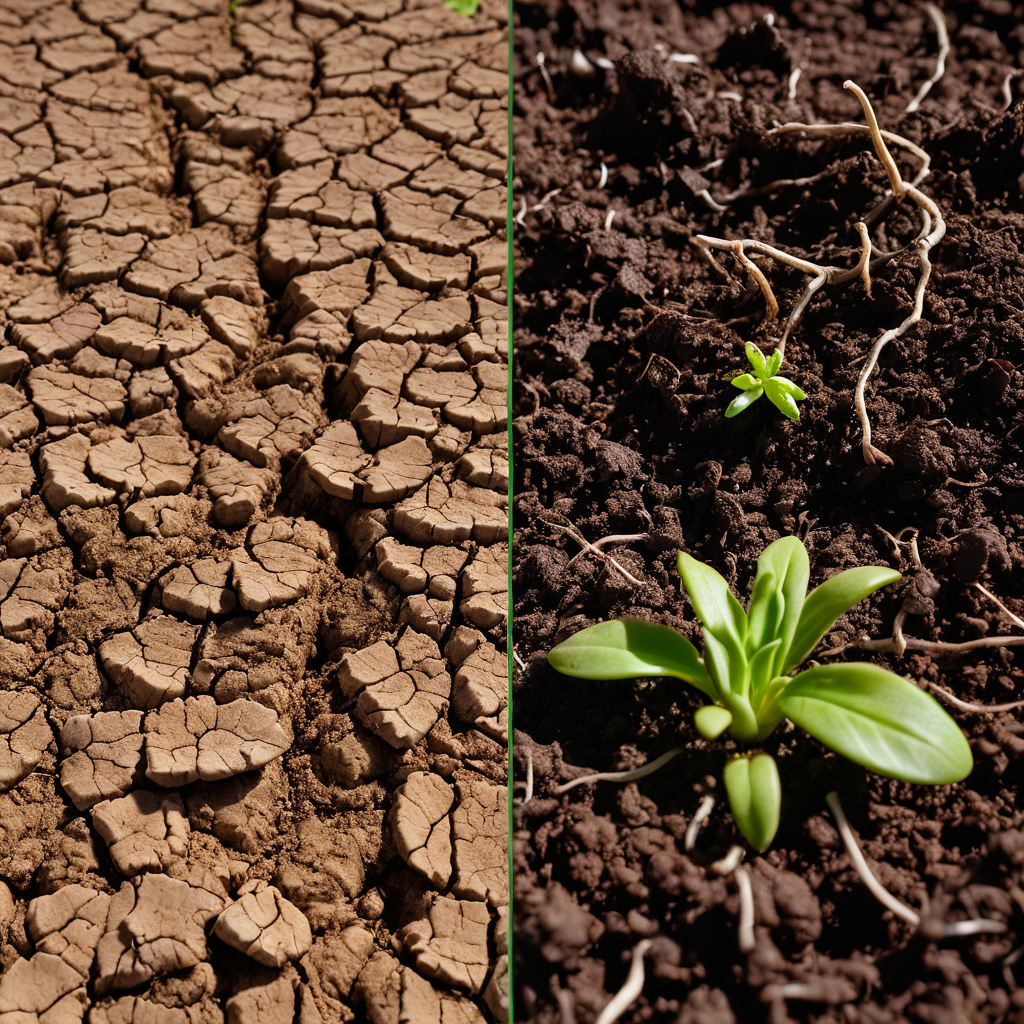
For decades, commercial agriculture has operated on a simple premise: plants need nutrients, so we add them. Bags of NPK fertilizer. Trace mineral supplements. pH adjusters. Growth stimulants. The industry has built empires on the belief that farming is chemistry — that with the right additives in the right ratios, we can manufacture plant health.
But this model has a fundamental flaw. Plants were never designed to be fed by humans.
They evolved over 450 million years to be fed by something far more sophisticated, far more efficient, and — when healthy — entirely free: soil biology.
The truth that’s reshaping modern agriculture? Humans don’t grow plants. Healthy, balanced soil biology grows plants. Our job isn’t to replace this ancient system with chemical shortcuts. It’s to get out of the way and let it work.
The Chemical Agriculture Myth
Walk into any agricultural supply store and you’ll see the paradigm clearly: NPK. Nitrogen for leaves. Phosphorus for roots. Potassium for fruit. The entire industry organizes around these three macronutrients, as if plant nutrition is a simple equation of inputs and outputs.
But here’s what the fertilizer bags don’t tell you: plants can’t directly use most of what’s in them.
That nitrogen in your urea? Plants can’t absorb urea. Bacteria must convert it to ammonium, then to nitrate. That phosphorus in your superphosphate? It’s barely soluble in soil water. Mycorrhizal fungi must solubilize it and transport it to roots. That potassium? It might already be present in your soil in massive quantities — locked in mineral forms that only specific microbes can unlock.
Chemical fertilizers bypass soil biology. They attempt to deliver plant nutrition directly, shortcutting the living systems that evolved to do this job. And in doing so, they create a cascade of unintended consequences:
- Salt buildup that dehydrates soil microbes and roots
- pH disruption that locks up existing nutrients
- Biological death as beneficial fungi and bacteria are poisoned
- Dependency loops — dead soil needs more inputs to produce the same yield
The result? Farmers spend more each season for diminishing returns, while their soil — their actual capital asset — degrades year over year.
The Biological Reality: Plants Feed Soil Life
Here’s the paradigm shift that changes everything: Plants don’t just take from soil. They actively feed it.
Through photosynthesis, plants capture carbon from the atmosphere and convert it to sugars. But they don’t use all of it. Up to 40% of a plant’s photosynthetic energy is pumped directly into the soil through root exudates — sugars, proteins, and carbohydrates that plants release into the rhizosphere (the area immediately surrounding their roots).
Why would plants give away nearly half their energy? Because they’re running a business.
Those root exudates are payment for services rendered. Plants use them to recruit, feed, and manage specific microbial communities that provide what the plant needs:
The Soil Biology Workforce
Mycorrhizal Fungi — The Underground Internet
These specialized fungi form symbiotic relationships with plant roots, penetrating root cells and extending hyphae (microscopic threads) far into the soil. A single ounce of healthy soil can contain 176 miles of fungal hyphae. This fungal network extends a plant’s effective root reach by 100 times or more, accessing water and nutrients (especially phosphorus) the plant could never reach alone.
In exchange for plant sugars, mycorrhizal fungi deliver minerals, water, and even chemical signals from other plants. They’re the underground internet, connecting plants across entire fields.
Nitrogen-Fixing Bacteria — Free Fertilizer Factories
Certain bacteria (like Rhizobium in legumes) can pull nitrogen from the air — which is 78% nitrogen gas — and convert it to plant-available ammonia. One teaspoon of healthy soil contains 100 million to 1 billion bacteria, many performing this nitrogen fixation continuously. The plant provides sugars; the bacteria provide nitrogen. No bagged urea required.
Phosphorus-Solubilizing Microbes — The Key Masters
Phosphorus is often abundant in soil but locked in insoluble mineral forms. Specific bacteria and fungi produce organic acids that dissolve these minerals, making phosphorus available to plants. Research published in Frontiers in Microbiology (2025) shows these microbes are critical for sustainable agriculture, especially as global phosphorus reserves deplete.
Nematodes and Protozoa — The Nutrient Cyclers
Nematodes (microscopic worms) and protozoa graze on bacteria and fungi. When they consume microbes, they excrete excess nitrogen and phosphorus in plant-available forms. Research shows nematodes alone account for 8-19% of nitrogen mineralization annually in healthy soils. They’re not pests — in balanced populations, they’re essential nutrient cyclers.
The Partnership: Plants Are in Control
Perhaps the most remarkable aspect of this system: plants are not passive recipients. They’re active managers.
Through root exudates, plants can:
- Select specific microbial species to recruit based on current needs
- Signal for defense when pathogens attack, recruiting protective microbes
- Adjust exudate chemistry to favor microbes that provide needed nutrients
- Communicate with other plants through fungal networks about threats or resource availability
This isn’t a one-way feeding system. It’s a sophisticated biological economy where plants actively manage their workforce, paying in carbon currency for services rendered.
When soil biology is healthy and diverse, plants have access to:
- All 17 essential nutrients — not just NPK, but micronutrients in balanced ratios
- Drought resistance — fungal networks find water unavailable to roots alone
- Disease protection — beneficial microbes outcompete pathogens and trigger plant immune responses
- Stress tolerance — biological signaling helps plants adapt to heat, cold, and salt stress
All of this happens without a single input from the farmer. The system is self-organizing, self-repairing, and — critically — free.
Why Chemicals Fail Long-Term
If biological agriculture is so efficient, why did chemical farming dominate the 20th century? Because chemistry offers immediate, visible results. A nitrogen-deficient plant turns green within days of urea application. A phosphorus-starved crop responds visibly to superphosphate.
But these are symptom treatments, not system health. And like any symptom treatment that ignores root causes, they create dependency and side effects:
The Death Spiral of Dead Soil
- Year 1: Chemical inputs produce good yields. Soil biology begins declining.
- Year 3-5: Yields plateau. Farmers increase input rates to maintain production.
- Year 6-10: Soil structure degrades. Compaction increases. Water infiltration drops.
- Year 10+: Drought vulnerability skyrockets. Pest pressure increases (no beneficial microbes for defense). Yields drop despite maximum inputs.
Meanwhile, the farmer’s costs have increased every single year. Input dependency has become a trap.
The Biology Alternative
In contrast, biological agriculture operates on compound returns. Year one of transition may show flat or slightly reduced yields as soil biology re-establishes. But by year three:
- Input costs drop 20-50% (less fertilizer, fewer pesticides)
- Drought resilience increases dramatically (fungal networks access deep water)
- Pest pressure decreases (beneficial microbes provide biological control)
- Soil organic matter increases, improving every aspect of soil function
American Farmland Trust case studies show farmers improving net income by $4 to $59 per acre per year after transitioning to soil health systems. ROI ranges from 7% to 345%. The math is clear: biology beats chemistry long-term.
The South African Context
For South African farmers, soil biology isn’t optional — it’s survival.
Our climate extremes demand resilient systems. Droughts that destroy chemically-dependent crops are survived by biologically-active soils that:
- Store more water — each 1% increase in soil organic matter holds an additional 150,000 liters of water per hectare
- Infiltrate faster — fungal hyphae create channels that move water into soil instead of running off
- Access deep reserves — mycorrhizal networks reach water at depths roots can’t touch
The regenerative agriculture movement in South Africa is growing rapidly, driven by farmers who’ve experienced the economics firsthand. Organizations like RegenAg SA and commercial providers like RegenZ are building the infrastructure for biological transition.
Testing Your Soil Biology
Before transitioning, understand where you are. Soil Fertility Testing & Consulting (SFTC) offers the SFW method developed by Dr. Elaine Ingham — a quantitative assessment of active soil biomass per gram of soil. This tells you not just what nutrients are present, but whether the biological workforce exists to make them available to plants.
The Path Forward: Feed Soil, Not Plants
If you’re a commercial farmer considering this transition, here’s the practical framework:
Phase 1: Stop Killing Biology (Year 1)
- Eliminate broadcast fungicides (they kill beneficial fungi)
- Reduce tillage intensity (tillage destroys fungal networks)
- Stop unnecessary pesticide applications
- Begin monitoring soil life, not just NPK
Phase 2: Feed the Workforce (Year 1-2)
- Add diverse cover crops (different plants feed different microbes)
- Apply quality compost or compost extracts (inoculates beneficial species)
- Maintain living roots in soil as close to 365 days/year as possible
- Minimize bare soil (sunlight kills soil microbes)
Phase 3: Reduce Inputs as Biology Increases (Year 2-3)
- As soil tests show available nutrient increases, reduce synthetic fertilizer rates
- Watch for pest pressure drops (beneficial microbes outcompete pathogens)
- Document input cost reductions and yield stability
- Fine-tune based on soil biology test results
Phase 4: Optimize the System (Year 3+)
- Minimal external inputs required
- Maximum reliance on soil biological processes
- Focus shifts from “what to add” to “how to support biology”
- Compounding returns on soil health investment
The Mindset Shift
The hardest part of this transition isn’t technical — it’s conceptual.
For generations, we’ve been taught to see ourselves as plant feeders. The hero of the story was the farmer with the right inputs, the right timing, the right equipment.
But biology agriculture requires a different self-image: we’re ecosystem managers, not plant feeders. Our job is to create conditions where soil biology thrives. Then we get out of the way.
The plants know what they need. They’ve been doing this for 450 million years. The soil biology knows how to deliver it — they’ve co-evolved with plants since the first roots touched earth.
Our role? Stop poisoning the system. Start feeding it. Then trust it to work.
Because at the end of the day, humans don’t grow plants.
Healthy, balanced soil biology grows plants. We’re just the stewards lucky enough to witness it.
Ready to assess your soil biology? Contact AfrecoSoil for comprehensive soil health analysis and transition planning tailored to South African farming conditions.